Table of Contents
The internet is full of websites that promise simple answers, useful guides, and quick solutions. The problem is that not every site explains things clearly, and some pages may repeat information without showing where it came from. This is one reason pushwiki com has attracted attention from people looking for easy-to-read information online.
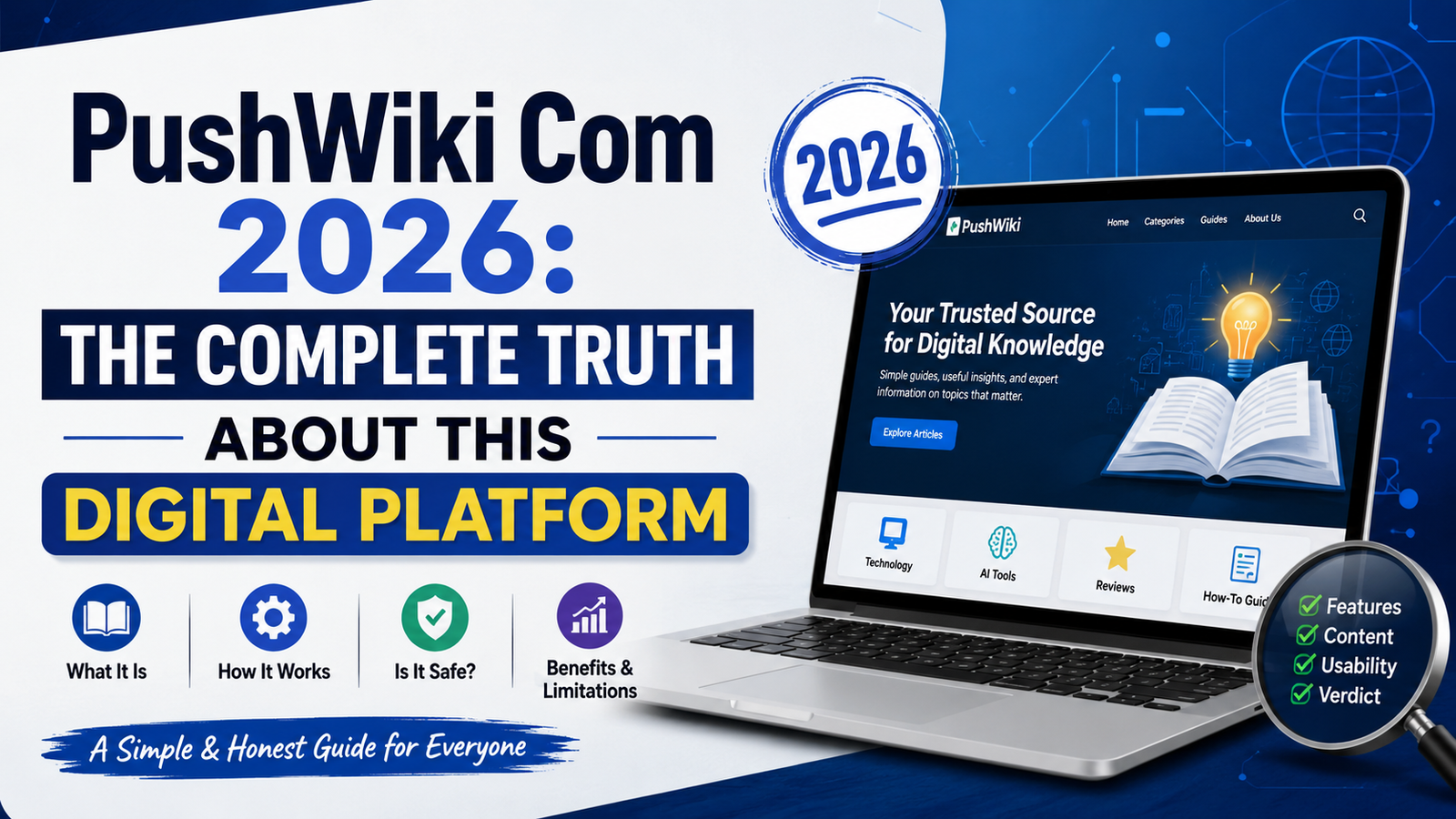
Several articles about the platform describe it as a knowledge or learning website covering areas such as SEO, blogging, digital marketing, technology, and online business. However, another recent review describes the live website differently, as a technology and AI information hub with sections for tech news, AI tools, reviews, and how-to guides. This difference is important because readers should understand what is actually being offered before trusting any description.
So, what is PushWiki Com really about? Is it useful for beginners? Is it safe to browse? Can it replace established information sources? And how should you use it if you find an article that interests you? This guide looks at these questions in simple English and separates useful observations from claims that should be checked.
What Is PushWiki Com?
At a basic level, pushwiki com is presented across the reviewed sources as an online information website where readers can find educational or informational articles. Several competitor articles describe it as a knowledge platform that makes subjects easier to understand. They mention topics such as search engine optimization, blogging, digital marketing, website management, technology, and online business. The common idea is simple: take a subject that may feel difficult and explain it in a way that a general reader can follow.
The name can also create some confusion. A traditional wiki normally allows a community of users to create or edit pages. The competitor material does not establish that PushWiki Com works in this same way. One source specifically says it is not a publicly editable wiki and is closer to a structured content site. Another source describes the site as a WordPress-based technology and AI hub. Because these descriptions differ, it is better not to assume that the name “wiki” means community editing. Readers should look at the actual site structure when deciding what kind of platform it is.
The reviewed articles also show that the website can be understood from a learning point of view. A beginner may search for an explanation of SEO, blogging, website creation, or another online topic and find a guide that introduces the basic idea. This can be useful when someone does not want to begin with a highly technical document. For example, a new blogger may first need to understand what keyword research means before learning how to use advanced SEO tools. A simple introductory article can make that first step less confusing.
At the same time, readers should separate easy-to-read information from expert-level evidence. A page can be well written without being the best source for medical, legal, financial, technical, or purchasing decisions. Some competitors make broad statements about the platform’s quality, research, or reliability without showing enough evidence. A better approach is to use the site as one source, check important claims against stronger references, and make decisions based on evidence rather than a confident writing style.
What Topics and Information Can You Find?
The competitor articles give a broad picture of the subjects associated with the website. The most common areas are SEO, blogging, digital marketing, website creation, online business, and technology. These subjects are closely connected. Someone who wants to build a website, for example, may need to learn about content creation, search visibility, audience growth, and basic website management at the same time.
SEO is one of the most frequently mentioned areas. Beginner-friendly SEO content may explain ideas such as keywords, search intent, on-page optimization, technical SEO, content optimization, and link building. These subjects can sound complicated when they are explained using industry terms. A useful beginner guide should instead explain what each idea means and show where it fits into a real website. For example, search intent simply means understanding what a person wants when they type a query into a search engine.
Blogging and content creation form another important group of topics. A new blogger may need help choosing a topic, planning articles, creating useful headings, improving readability, and building a consistent publishing routine. Practical content can be valuable here because beginners usually need steps rather than long definitions. A good guide should answer questions such as what to do first, what mistakes to avoid, and what result to expect from each step.
Digital marketing and online business are also mentioned by several competitors. These subjects can include social media, email marketing, audience building, content marketing, traffic generation, freelancing, digital products, and business growth. However, these topics change quickly. A strategy that worked several years ago may not work in the same way today. That means readers should check dates and look for current information before applying a marketing recommendation to a real business.
Technology is where the competitor descriptions become especially important. One reviewed article says the live site is organized around Tech News, AI Tools, Reviews, and How-to Guides. Other articles instead describe a broader educational library focused on SEO and digital learning. Since the sources do not fully agree, readers should verify the current categories directly on the website. This is a useful lesson for anyone researching an unfamiliar platform: do not treat third-party descriptions as stronger evidence than the source itself.
How Does the Platform Work for a Beginner?
The main advantage suggested by the competitor material is simplicity. Several articles describe short paragraphs, clear headings, practical explanations, and beginner-friendly language. These features can make a website easier to use, especially for someone who is learning a new subject for the first time. A reader should be able to scan a page, understand its main purpose, and quickly decide whether the information answers the question they had.
Imagine a person who has just created a small website. They may hear terms such as “keyword research,” “search intent,” “content strategy,” and “on-page SEO” but not know how these ideas connect. A beginner-focused article can start with the basic meaning of each term and then explain what to do next. This is more useful than giving the reader a long list of advanced tools without explaining why those tools matter.
Internal organization can also make learning easier. Some competitor articles describe category pages, related articles, internal links, and topic clusters. If these features are actually available on the current site, they can help readers move from one related subject to another. For example, someone reading about blogging could move toward content planning and then learn about SEO. The reader does not have to start a completely new search every time a new question appears.
However, beginners should not confuse a smooth reading experience with complete learning. Reading an article is only the first step. A stronger learning process is to read, take notes, test the idea, and then compare the result with another reliable source. If a guide explains how to improve a website title, a reader can make the change and later observe whether it improves clarity or search performance. This turns passive reading into practical learning.
There is also an important reason to check dates. SEO, artificial intelligence, social media platforms, software tools, and online marketing practices can change quickly. An old article may still explain a basic concept correctly but give outdated instructions about a tool or platform. Before following a detailed recommendation, check the publication date, update date if available, and official documentation for the product or service being discussed.
Is PushWiki Com Safe, Legit, and Reliable?
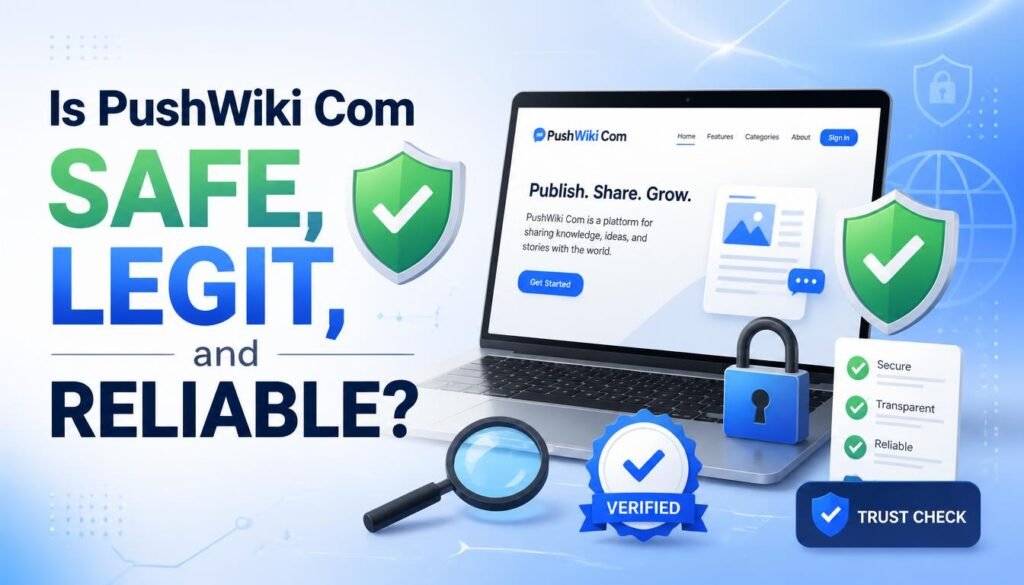
Safety and reliability are two different questions, and they should not be treated as the same thing. A website can be safe to browse but still contain information that needs checking. Likewise, a website can publish useful articles without being an authoritative source for every subject. The competitor articles generally recommend normal online safety habits, but the evidence they provide about trust and content quality varies.
One review reported that it did not encounter aggressive pop-ups, forced downloads, or suspicious redirects during its visit. It also noted that the site used HTTPS and standard WordPress infrastructure. These are useful observations, but they are not proof that a website is permanently safe. Website conditions can change, and a reader’s experience may differ. Therefore, users should still avoid downloading unknown files or entering sensitive information unless they understand why it is required.
The bigger question is informational trust. One competitor review says that some articles it examined were readable but lacked the depth or testing expected from established technical sources. Another competitor presents the platform as a structured and researched knowledge system. These claims should not automatically be accepted as fact. The strongest approach is to judge each article individually. Look for named authors, dates, supporting evidence, links to primary sources, clear examples, and transparent explanations.
This matters even more for high-stakes subjects. If an article discusses a technical product, check its specifications against the manufacturer’s documentation. If it discusses a law, look for official government or legal sources. If it discusses health, use established medical organizations or qualified professionals. If it discusses business data, check the original report or dataset. A general information website can help you understand a subject, but verification becomes more important when the cost of a wrong decision is high.
A useful rule is read first, verify second, act third. Do not share personal information simply because a website looks professional. Do not buy a product because one review sounds convincing. Do not change an important business strategy because one article recommends it. Instead, use the page to understand the topic, then confirm important facts elsewhere. This habit gives readers more control and reduces the risk of relying on unsupported claims.
What Makes the Site Useful—and Where Does It Fall Short?
The strongest feature repeatedly mentioned by competitors is readability. Simple language can make a difficult topic feel less intimidating. This is especially helpful for students, new bloggers, small business owners, and casual readers. A beginner does not always need a 5,000-word technical document. Sometimes the best starting point is a clear explanation that answers one question and gives the reader a practical next step.
Another possible strength is broad subject coverage. The reviewed material connects the platform with digital skills, online business, marketing, blogging, and technology. A reader who is building an online project may need several of these subjects at once. Instead of treating SEO, content, and website management as completely separate areas, a broad information platform can help readers see how they fit together.
The competitors also point to organized content as a possible benefit. Categories, related pages, internal links, and topic groups can make research faster. For example, a beginner might start with “What is SEO?” and then move to keyword research, content optimization, and technical SEO. That kind of progression is more useful than reading unrelated articles in random order. Still, readers should confirm that these structures exist and remain current on the actual website.
There are clear limitations too. Some competitor articles make very strong claims about the platform’s depth, research quality, or learning system without providing enough evidence. Another review raises concerns about conflicting descriptions of the site across third-party articles. That disagreement is important and should not be ignored. When several sources describe a website in different ways, the safest choice is to inspect the website itself instead of repeating the most attractive description.
The lack of documented evidence can also matter. A simple article may explain a topic correctly, but readers cannot always tell how the information was researched. For casual learning, that may be acceptable. For a major purchase, professional project, academic assignment, or technical decision, stronger sources are usually needed. The platform can therefore be most useful as a starting point, not automatically as the final authority.
Who Can Benefit From Using PushWiki Com?
Beginners and Students
Beginners are probably the clearest audience for the type of simple educational content described by the competitors. Someone who has never worked with SEO, blogging, website management, or digital marketing may find technical industry websites difficult to understand. A simpler guide can explain the basic idea before the reader moves to advanced resources.
Students can also use this type of content for early research. For example, a student preparing a presentation about digital marketing may first read an introductory article to understand the main terms. After that, they can move to textbooks, academic papers, official reports, or expert sources. This two-step approach is often easier than trying to understand advanced research without basic background knowledge.
Bloggers and Website Owners
Bloggers can benefit from beginner-level explanations of content strategy, SEO, website structure, and audience growth. A new website owner may not need advanced technical advice every day. They may simply need to understand why a page needs a clear title, how a blog post should be organized, or what search intent means.
For example, imagine a small food blog with ten articles but very little traffic. The owner could use introductory SEO information to learn about search intent and content organization. They could then review their existing posts, improve the headings, make the answers clearer, and check whether each article actually solves a reader’s problem. The important part is applying the lesson rather than simply reading it.
Small Business Owners
Small business owners often need to learn many digital skills at the same time. They may manage a website, social media page, blog, email list, and online listings without having a full marketing team. Simple educational content can help them understand the basics before deciding whether they need professional help.
However, business owners should be careful when using general guides to make important decisions. A basic article can explain an idea, but it may not understand the specific market, competitors, budget, or customers of a business. Use general information to build knowledge, then combine it with real data from the business itself.
Casual Readers and Tech Users
The audience may also include people who simply want a quick explanation of a new technology topic. If the current website continues to focus on technology and AI content as described by one competitor review, casual readers may find value in its news, tool explainers, reviews, and how-to material.
The key is knowing what you need from the article. If you want a basic introduction, a readable guide may be enough. If you want exact specifications, professional testing, or a purchasing recommendation, continue your research. The more important the decision, the more important independent verification becomes.
How to Get More Value From PushWiki Com
Start With One Clear Question
Do not begin by opening many unrelated pages. Start with the exact question you want to answer. For example, instead of searching broadly for “SEO,” ask, “What is keyword research?” A focused question makes it easier to understand whether the article actually helps you.
Check the Article Before Trusting It
Look at the author name, publication date, update date, supporting links, examples, and sources. If the article gives statistics, ask where the numbers came from. If it makes a strong claim, see whether evidence is provided. This quick check can take less than a minute but can greatly improve the quality of your research.
Follow Useful Related Topics
If an article introduces a concept you do not understand, look for a related explanation. Learning works better when subjects are connected. For example, a person learning SEO can move from search intent to keyword research and then to content optimization. This creates a simple learning path.
Test What You Learn
Whenever possible, turn information into action. If you learn a blogging technique, try it on a real post. If you learn a website improvement, test it on one page. If you learn about a software feature, check the official product documentation and try the feature yourself.
Cross-Check Important Information
Use multiple sources when the information matters. Official websites are especially useful for product specifications, software features, policies, pricing, and technical instructions. Independent expert sources can then provide additional context.
Keep Notes
Simple notes can make online research much more useful. Write down the key idea, the source, the date, and anything you still need to verify. This is especially helpful when you are researching a large project and do not want to reopen the same pages repeatedly.
Know When to Move to a Better Source
A good information site does not need to answer every question. If an article gives you the basic idea but leaves important details unanswered, that is a sign to continue researching. Use the first source to understand the subject, then move to primary or specialist sources for deeper information.
PushWiki Com vs. Other Information Platforms
Compared With Wikipedia
Wikipedia is designed as a collaborative encyclopedia, while the competitor material generally presents PushWiki Com as an independently published information or content platform. The difference is important because the editing model affects how information is created and maintained.
Wikipedia is often useful when you need background information, definitions, historical context, or links to further references. A simpler blog-style guide may be easier for a beginner who wants a direct explanation. Neither format is automatically better for every question.
Compared With Educational Blogs
Traditional blogs can be highly focused. One blog might specialize in SEO, another in technology, and another in business. This can provide deeper expertise within a specific field. A broader platform may be more convenient when a reader wants to explore several related subjects in one place.
The trade-off is depth. A general website may introduce many topics but not explore every one at expert level. Before relying on an article, check whether it provides enough evidence and practical detail for your particular goal.
Compared With Online Courses
Online courses usually offer a more structured learning experience. They may include lessons, exercises, quizzes, projects, progress tracking, or certificates. The competitor articles themselves note that the platform does not appear to provide the same type of formal course experience.
For someone who only needs a quick answer, an article is faster. For someone who wants to build a skill from beginner to advanced level, a well-designed course may be more suitable. The best choice depends on the learner’s goal, available time, and desired depth.
Compared With Official Sources
Official sources should usually win when the question involves a product specification, software function, government rule, company policy, or technical requirement. A third-party article can explain the subject in simpler language, but the original source is often the best place to confirm the exact details.
This comparison leads to a useful conclusion: do not ask which website is universally best. Ask which source is best for the question you are trying to answer. A beginner guide, encyclopedia, expert blog, course, and official document can all serve different purposes.
Final Verdict: Should You Use PushWiki Com in 2026?
The five competitor articles show that there is interest in pushwiki com as an easy-to-read source of online information, but they do not all agree about exactly what the platform is or how strong its content is. Several describe a broad educational knowledge hub covering SEO, blogging, digital marketing, and online business. Another review describes the live site as a technology and AI information hub with tech news, AI tools, reviews, and how-to guides. That difference is a reason to verify the current site instead of accepting every third-party description.
For casual learning, the platform may be useful when you want a simple introduction to a topic. Clear writing, organized sections, and practical explanations can help beginners understand subjects that initially seem difficult. It may also give bloggers, students, marketers, and website owners ideas for further research. The biggest benefit is not that one website has every answer, but that a readable article can help you understand what to search for next.
The main limitation is trust depth. Some competitor claims about research, expertise, content systems, or authority are stronger than the evidence shown in the articles themselves. The more critical the decision, the more carefully you should verify information. Product specifications should be checked with manufacturers, technical instructions with official documentation, and serious professional topics with trusted specialist sources.
A smart reader therefore does not need to completely accept or reject the platform. Use it according to the job. Read it for context, learn the basic idea, take useful notes, and then confirm important facts elsewhere. In 2026, with more online content being produced every day, knowing how to verify information may be just as valuable as finding information in the first place.
FAQs
Q: What is PushWiki Com?
A: It is described by competitor sources as an online information platform. Its exact focus varies between sources, with descriptions covering digital learning as well as technology and AI content.
Q: Is PushWiki Com free?
A: The reviewed articles generally describe its content as accessible without a strict paywall. Check the current website for its latest access and pricing policies.
Q: Is PushWiki Com a real wiki?
A: The competitor material does not establish it as a traditional community-edited wiki. One review specifically describes it as closer to a structured content website.
Q: Is PushWiki Com safe to browse?
A: One reviewer reported no suspicious redirects, forced downloads, or aggressive pop-ups during testing. Normal online safety practices are still recommended.
Q: Can beginners use PushWiki Com?
A: Yes, the reviewed articles consistently describe the content as simple and beginner-friendly, particularly for digital topics.
Q: Should you trust everything published there?
A: No website should automatically be treated as the final authority. Verify important claims with official, expert, or primary sources before making important decisions.
Conclusion
PushWiki Com is best approached as a starting point for online learning rather than a replacement for every other source. The competitor articles show that readers value its simple, accessible style, while also revealing differences in how the platform is described. That makes careful verification especially important for anyone researching the site for the first time.
The smartest way to use it is simple: find the information you need, understand the basic idea, test useful suggestions, and verify important facts with stronger sources. Whether you are a beginner, blogger, student, business owner, or casual reader, this approach can help you get useful knowledge without depending too heavily on a single website.