Table of Contents
Introduction
Starting a business is exciting, but managing money can feel confusing, especially if you have never built a financial plan before. Many new founders focus on creating a great product or finding customers but forget to plan how their business will earn, spend, and save money over time.
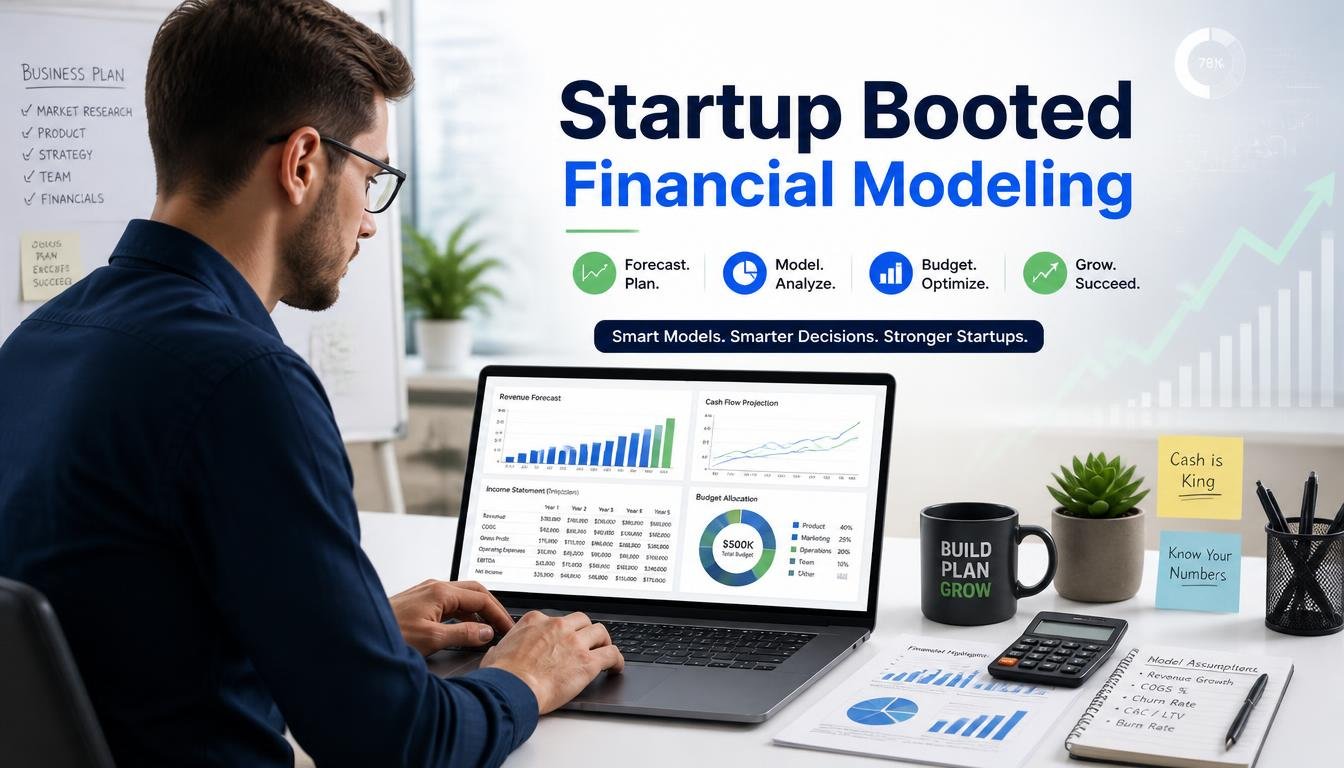
This is where startup booted financial modeling becomes useful. A financial model is a simple way to estimate your future income, expenses, profits, and cash flow. It helps you understand whether your business idea can support itself and what changes you may need to make before problems appear.
Unlike startups that raise money from investors, bootstrapped businesses rely on their own savings or the money they earn from customers. That means every dollar matters. A clear financial model helps you make smarter decisions, avoid unnecessary spending, and prepare for future growth.
In this beginner-friendly guide, you will learn what startup financial modeling is, why it matters, and how to build a simple financial model step by step. You do not need an accounting background or expensive software—just a willingness to plan ahead and keep your numbers updated.
What Is Startup Booted Financial Modeling?
Startup booted financial modeling is the process of creating a financial plan for a business that is funded by its owner instead of outside investors. The model estimates how much money the business will earn, spend, and keep over a specific period, usually monthly or yearly.
Think of it as a roadmap for your startup’s finances. Instead of guessing whether you will have enough money next month, you use realistic estimates to make informed decisions.
A good financial model answers important questions like:
- How much money do I need to start?
- When will my business become profitable?
- Can I afford to hire employees?
- How much should I spend on marketing?
- How long will my cash last?
Rather than predicting the future perfectly, financial modeling helps you prepare for different situations and reduce financial surprises.
What Does “Bootstrapped Startup” Mean?
A bootstrapped startup is a business that grows without outside investment from venture capital firms or angel investors. The founder uses personal savings, business income, or small loans to fund operations.
Many successful businesses began this way because founders wanted to maintain full ownership and make independent decisions.
Some advantages of bootstrapping include:
- Keeping full control of your company
- No pressure from investors
- Making decisions based on long-term goals
- Building sustainable growth
However, bootstrapped startups also face challenges. Since funding is limited, founders must carefully manage expenses and avoid wasting cash.
This is why financial planning becomes even more important.
What Is a Financial Model?
A financial model is usually a spreadsheet that shows how your business is expected to perform financially.
It combines estimates about sales, expenses, and growth into one place so you can see the bigger picture.
A simple startup financial model often includes:
- Expected monthly sales
- Product or service pricing
- Operating expenses
- Startup costs
- Cash flow forecast
- Profit and loss estimate
- Break-even analysis
For example, imagine you plan to sell handmade candles online.
Your financial model may look something like this:
| Item | Monthly Estimate |
|---|---|
| Sales Revenue | $4,000 |
| Product Costs | $1,400 |
| Marketing | $500 |
| Website & Software | $200 |
| Shipping | $350 |
| Other Expenses | $450 |
| Estimated Profit | $1,100 |
This simple table gives you a quick view of how your business could perform each month.
As your business grows, you can update the numbers with actual results and improve your forecasts.
How It Differs from Financial Models for Funded Startups
Although every startup benefits from financial planning, bootstrapped startups have different priorities than companies backed by investors.
| Bootstrapped Startup | Funded Startup |
|---|---|
| Uses personal or business income | Uses investor funding |
| Focuses on positive cash flow | Often focuses on rapid growth |
| Keeps spending under control | May spend aggressively to expand |
| Plans conservatively | May accept higher financial risk |
| Prioritizes sustainability | Prioritizes market expansion |
A funded startup may spend heavily on hiring, advertising, or product development because investors provide additional capital.
A bootstrapped business, on the other hand, must make every expense count. Careful financial forecasting helps founders avoid running out of money before the business becomes profitable.
Build Your Startup Financial Model Step by Step
Creating a financial model may sound difficult, but beginners can build a useful one by taking it one step at a time. The goal is not to predict every detail perfectly. Instead, focus on making reasonable estimates based on the information you have today.
Remember that your financial model is a living document. As your business grows, you should review and update it regularly.
Define Your Business Goals
Before working with numbers, decide what your business wants to achieve.
Ask yourself questions such as:
- What product or service will I sell?
- Who are my target customers?
- How much do I hope to earn in my first year?
- When do I want to become profitable?
- What are my biggest business expenses?
Clear goals make it much easier to create realistic financial projections.
For example:
Business: Online graphic design service
Goal: Reach $8,000 in monthly revenue within one year while keeping expenses below 60% of revenue.
Having measurable goals helps guide every financial decision you make.
Estimate Startup Costs
Next, calculate how much money you need before opening your business.
Many founders underestimate startup costs, which can create cash flow problems later.
Common startup expenses include:
- Business registration
- Website development
- Domain name
- Software subscriptions
- Computer equipment
- Marketing and advertising
- Product inventory
- Office supplies
- Legal and accounting fees
- Insurance
For example:
| Startup Expense | Estimated Cost |
|---|---|
| Website | $800 |
| Laptop | $1,200 |
| Logo Design | $300 |
| Marketing | $700 |
| Software | $500 |
| Legal Fees | $600 |
| Total Startup Cost | $4,100 |
Listing every expected expense gives you a realistic picture of how much money you need before launching your business.
Forecast Revenue
Once you know your startup costs, the next step is to estimate how much money your business can earn. This is called a revenue forecast. It is one of the most important parts of a startup financial model because it helps you plan your budget, hiring, and future growth.
When creating a forecast, avoid guessing or choosing numbers simply because they look good. Instead, use realistic assumptions based on your pricing, target customers, and expected sales.
Ask yourself questions like:
- How many customers can I realistically get each month?
- How much will each customer spend?
- Will sales increase over time?
- Are there busy or slow seasons?
A simple formula is:
Revenue = Number of Customers × Average Selling Price
For example:
| Month | Customers | Average Sale | Estimated Revenue |
|---|---|---|---|
| January | 25 | $60 | $1,500 |
| February | 35 | $60 | $2,100 |
| March | 50 | $60 | $3,000 |
| April | 65 | $60 | $3,900 |
This example assumes your customer base grows gradually as your marketing improves and more people discover your business.
Tips for Better Revenue Forecasts
- Start with conservative estimates.
- Research competitors in your industry.
- Consider seasonal demand.
- Review your forecast every month.
- Compare estimated sales with actual results.
Your revenue forecast does not need to be perfect. It simply needs to be reasonable enough to help you make informed decisions.
Estimate Expenses and Cash Flow
Revenue is only one side of the picture. You also need to know where your money is going. Tracking expenses helps you avoid overspending and gives you a clearer view of your startup’s financial health.
Expenses usually fall into two categories.
Fixed Costs
These stay about the same each month.
Examples include:
- Office rent
- Internet service
- Business insurance
- Software subscriptions
- Employee salaries
- Website hosting
Variable Costs
These change depending on your sales or business activity.
Examples include:
- Shipping costs
- Packaging
- Payment processing fees
- Raw materials
- Advertising campaigns
- Sales commissions
Keeping these categories separate makes your financial model easier to understand.
Build a Simple Cash Flow Forecast
Many beginners think profit and cash flow mean the same thing, but they are different.
- Profit shows whether your business earns more than it spends.
- Cash flow shows how much money actually enters and leaves your bank account.
A business can be profitable on paper but still struggle if customers pay late or expenses are due immediately.
Here’s a simple monthly cash flow example:
| Item | Amount |
|---|---|
| Opening Cash Balance | $8,000 |
| Cash Received | $3,500 |
| Cash Paid for Expenses | $2,700 |
| Closing Cash Balance | $8,800 |
A cash flow forecast helps you answer questions like:
- Can I pay suppliers next month?
- Do I need to delay hiring?
- Can I afford new equipment?
- Will I have enough money during slower months?
For bootstrapped startups, maintaining positive cash flow is often more important than chasing rapid growth.
Calculate Profit and Break-Even Point
After estimating your revenue and expenses, you can calculate your expected profit.
A basic profit calculation is:
Profit = Revenue − Total Expenses
For example:
| Item | Amount |
|---|---|
| Revenue | $6,000 |
| Total Expenses | $4,500 |
| Net Profit | $1,500 |
Positive profits allow you to reinvest in your business, build savings, and prepare for unexpected costs.
Understand Gross Profit and Net Profit
These two terms are often confused.
Gross Profit is the money left after paying the direct costs of producing your product or service.
Net Profit is what remains after paying all business expenses, including marketing, software, rent, and taxes.
Knowing both numbers helps you understand where your money is being spent.
Find Your Break-Even Point
Your break-even point is when your total income equals your total expenses. At this stage, your business is not making a profit, but it is not losing money either.
For example:
- Monthly expenses: $5,000
- Profit per product sold: $50
You would need to sell:
$5,000 ÷ $50 = 100 products
After selling more than 100 products, your business starts generating profit.
Calculating your break-even point helps you set realistic sales goals and measure your progress.
Test Different Business Scenarios
One advantage of financial modeling is that you can test different situations before they happen.
Try creating three versions of your forecast:
- Best-case scenario: Sales grow faster than expected.
- Expected scenario: Sales match your current plan.
- Worst-case scenario: Sales are lower, or expenses increase.
For example:
| Scenario | Monthly Revenue | Monthly Expenses | Estimated Profit |
|---|---|---|---|
| Best Case | $9,000 | $5,500 | $3,500 |
| Expected | $7,000 | $5,200 | $1,800 |
| Worst Case | $5,000 | $5,300 | -$300 |
Planning for multiple outcomes helps you prepare for uncertainty instead of reacting in panic when challenges arise.
Keep Your Financial Model Updated
A financial model is not something you create once and forget. Your business will change over time, and your model should change with it.
Set aside time each month to:
- Update actual sales figures.
- Record new expenses.
- Adjust revenue projections.
- Review cash flow.
- Compare forecasts with real results.
- Revise assumptions if needed.
Even spending 30 minutes each month updating your model can help you spot trends early and make better decisions.
After building your financial model, your work is not finished. The next step is tracking the numbers that show whether your business is moving in the right direction. Monitoring these key financial metrics helps you make better decisions and adjust your strategy before small problems become larger ones.
Financial Metrics Every Bootstrapped Startup Should Track
Creating a financial model is only the beginning. To keep your startup healthy, you need to monitor a few important numbers regularly. These metrics, often called Key Performance Indicators (KPIs), show how your business is performing and help you make better decisions.
You do not need to track dozens of numbers. Start with the basics and review them every month.
Revenue Growth
Revenue growth shows whether your sales are increasing over time.
For example:
- January Revenue: $3,000
- February Revenue: $3,600
This means your revenue increased by 20%.
Steady revenue growth usually means your marketing, pricing, or products are working well. If growth slows, you can investigate the reason and make adjustments before it becomes a bigger problem.
Cash Flow
Cash flow is the movement of money into and out of your business.
Positive cash flow means you have enough money to pay bills, employees, and suppliers. Negative cash flow means more money is leaving than coming in.
Even profitable startups can fail if they run out of cash. That is why reviewing your cash flow every month is one of the most important habits you can build.
Gross Margin
Gross margin tells you how much money remains after paying the direct cost of creating your product or service.
For example:
- Revenue: $10,000
- Cost of Goods Sold: $4,000
Gross Profit = $6,000
A healthy gross margin gives you more money to cover operating expenses and grow your business.
Net Profit Margin
Your net profit margin shows how much profit remains after all expenses are paid.
For example:
- Revenue: $10,000
- Net Profit: $2,000
Net Profit Margin = 20%
Tracking this percentage over time helps you see whether your business is becoming more efficient.
Working Capital
Working capital measures whether your business can handle short-term financial obligations.
It compares your current assets, such as cash and accounts receivable, with your current liabilities, such as bills and short-term loans.
Positive working capital gives you more flexibility to manage daily operations without financial stress.
Return on Investment (ROI)
ROI measures whether the money you spend produces worthwhile results.
Suppose you spend $500 on online advertising and earn $2,000 in additional sales. That investment has generated a positive return.
Reviewing ROI helps you decide which marketing campaigns, software tools, or business improvements deserve more investment.
Key Performance Indicators (KPIs)
Besides financial metrics, consider tracking:
- Monthly sales
- Number of new customers
- Customer retention
- Average order value
- Conversion rate
- Customer acquisition cost (CAC)
- Customer lifetime value (LTV)
You do not need every KPI from the beginning. Choose the ones that directly support your business goals.
Common Financial Modeling Mistakes (and How to Avoid Them)
Every startup makes mistakes, especially in the beginning. The good news is that many financial problems can be avoided with realistic planning and regular updates.
Unrealistic Revenue Forecasts
Many founders assume sales will grow quickly because they believe strongly in their product. While confidence is important, financial planning should be based on evidence rather than hope.
Instead of assuming you’ll gain 500 customers in your first month, research similar businesses and estimate more conservative numbers.
A good practice is to create forecasts based on what you can realistically achieve.
Ignoring Hidden Costs
Small expenses often add up faster than expected.
Common hidden costs include:
- Payment processing fees
- Business insurance
- Taxes
- Software upgrades
- Equipment repairs
- Shipping increases
- Professional services
- Bank charges
Include these expenses in your financial model so they do not surprise you later.
Forgetting About Cash Flow
Some businesses make good profits on paper but still struggle because customers pay slowly or expenses arrive earlier than expected.
For example, you may invoice a client for $5,000 today, but they may not pay for another 30 days. Meanwhile, you still need to pay your suppliers this week.
A monthly cash flow forecast helps prevent this problem.
Never Updating the Financial Model
Markets change, customer behavior changes, and businesses evolve.
If you never update your financial model, it quickly becomes outdated.
Review your financial model every month and compare:
- Forecasted revenue vs. actual revenue
- Forecasted expenses vs. actual expenses
- Cash flow changes
- Business growth
- New costs
Updating your model regularly leads to better strategic planning and more accurate financial forecasting.
Beginner Financial Model Checklist
Before each month ends, ask yourself:
- Did sales match my forecast?
- Were expenses higher than expected?
- Is my cash balance increasing?
- Have I added any new business costs?
- Should I adjust next month’s revenue projections?
- Am I still on track to reach my goals?
This simple checklist helps you improve your model over time.
Best Tools, Templates, and Tips for Better Financial Planning
The good news is that you do not need expensive software to create a useful financial model. Many successful entrepreneurs start with simple spreadsheets and improve them as their businesses grow.
Google Sheets
Google Sheets is an excellent choice for beginners because it is free, cloud-based, and easy to share with business partners or accountants.
Benefits include:
- Automatic saving
- Easy collaboration
- Works on any device
- Plenty of free financial templates
Microsoft Excel
Microsoft Excel remains one of the most popular financial modeling tools.
It offers advanced formulas, charts, and reporting features that become valuable as your startup grows.
If you already know Excel, it can become a powerful tool for budgeting, forecasting, and data analysis.
Financial Model Templates
Instead of building everything from scratch, you can use ready-made templates.
Many templates include:
- Revenue forecasts
- Expense tracking
- Profit and loss statements
- Cash flow projections
- Break-even analysis
- Budget planning
Choose a template that is simple and easy to understand rather than one filled with complicated formulas.
Practical Tips for Better Financial Planning
Keep these best practices in mind:
- Use realistic assumptions instead of optimistic guesses.
- Track actual results every month.
- Build an emergency cash reserve whenever possible.
- Plan for slow sales periods.
- Test best-case, expected, and worst-case scenarios.
- Keep business and personal finances separate.
- Save receipts and financial records for tax purposes.
- Review industry benchmarks to understand how your business compares with similar companies.
The goal of financial modeling is not to predict the future perfectly. It is to help you make informed decisions based on the best information available.
Frequently Asked Questions
What is startup booted financial modeling?
Startup booted financial modeling is the process of estimating a bootstrapped startup’s revenue, expenses, cash flow, and profit to support better financial planning and decision-making.
Why is financial modeling important for bootstrapped startups?
It helps founders manage limited resources, forecast future performance, avoid cash shortages, and make informed business decisions without relying on outside funding.
What should a startup financial model include?
A basic model should include startup costs, revenue projections, operating expenses, cash flow forecasts, profit estimates, and break-even analysis.
Can I create a financial model without accounting experience?
Yes. Beginners can build a simple financial model using spreadsheet tools like Google Sheets or Microsoft Excel by following step-by-step planning methods.
How often should I update my financial model?
Update your financial model at least once a month to compare forecasts with actual results and adjust your assumptions as your business grows.
Conclusion
Building a startup without outside funding requires careful planning, smart decisions, and disciplined spending. A simple financial model gives you a clearer picture of where your business stands today and where it could go in the future.
You do not need advanced accounting skills or expensive software to get started. Begin with realistic revenue projections, estimate your expenses, monitor your cash flow, and review your results each month. As your startup grows, your financial model will become one of your most valuable business tools.
Remember that financial modeling is not about predicting the future perfectly. It is about preparing for different possibilities so you can make informed decisions with confidence. A well-maintained financial model can help your business stay sustainable, reduce unnecessary risks, and support long-term growth.